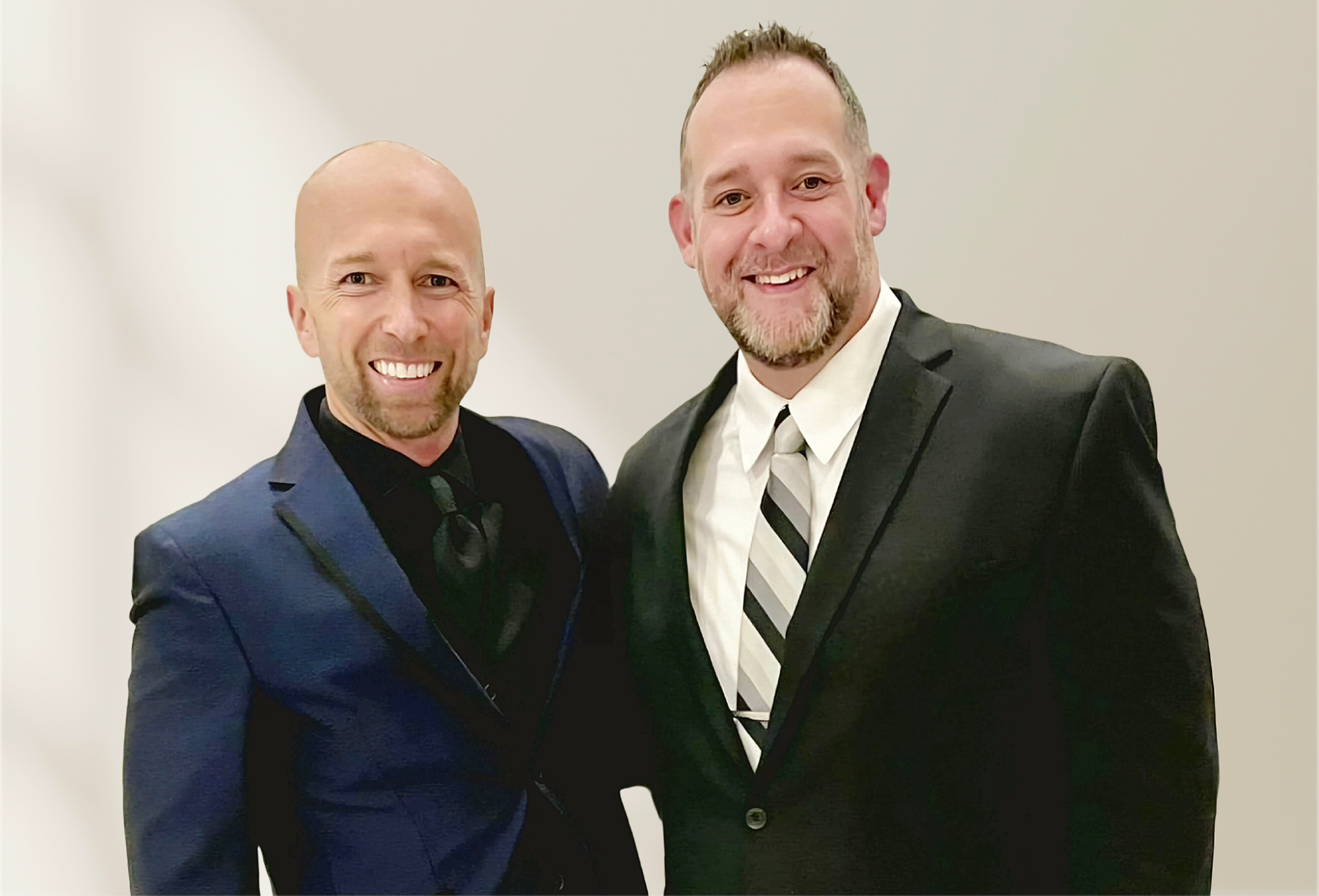
Justin Fox, Time magazine's business and economics columnist, just published a Q&A with yours truly at his Curious Capitalist blog. Here is the post, entitled "Michael Panzner Doesn't Think the Hard Times Are Over":
I recently devoted a column to Peter Schiff, whom I first discussed in a piece headlined "The Armageddon Gang" in March 2007. Another member of the gang, Michael Panzner—whose 2007 book Financial Armageddon gave the group its name—recently came out with a new book titled When Giants Fall: An Economic Roadmap for the End of the American Era. Panzner, a veteran Wall Street trader, is refreshingly honest and modest for a would-be guru—as evidenced by his answers to five questions I asked him via e-mail.
1. In Financial Armageddon, published in March 2007, you predicted big financial trouble. But was what happened after that anything like you envisioned?
At first, I thought it might take anywhere from three to seven years for events to play out. However, it seems that I was way too conservative. I've been surprised by the speed at which the crisis -- and the responses it has engendered -- have unfolded so far.
2. What do you make of the current green-shoots-or-withered-ones debate? Important, or entirely beside the point?
In some respects, it is entirely predictable. There are always going to be differences of opinion about what the future holds following the sort of economic trauma we've been through. That said, it seems like many of those who see "green shoots" are the ones who failed to see trouble coming in the first place. Otherwise, it is entirely possible that we will witness short-lived recoveries in the economy -- "dead cat bounces," perhaps -- like those that are common in bear markets. Either way, I believe we are nowhere near a bottom -- in terms of GDP or share prices.
3. When Giants Fall paints a picture of a world in which U.S. economic power is in steady decline. Can you envision a scenario in which this doesn't happen?
Of course. One lesson I've learned -- and keep learning, sometimes the hard way -- is that no one has a crystal ball and anything can happen. Maybe somebody will dream up a productivity-enhancing miracle that benefits humanity in the same way that cheap oil once did. Or, maybe our geopolitical rivals will blow each other to bits and leave the U.S. as the last power standing. But assuming those things don't happen, history and the evidence I've highglighted in my new book suggests that our nation's destiny is no different than that of each and every great power that preceded us.
4. Say the U.S. is in inexorable decline. What's a regular investor/worker/student-about-to-enter-the-workforce to do about it?
It's not an easy question, and there are no easy answers. While it would be great to say "do this" or "do that" -- or to publish a book with a title like "How to Make a Killing in a World Gone to Hell" -- "winning" is likely to be a matter of holding on what you have. One of the complaints some readers of Financial Armageddon had, for example, was that the solutions I suggested were simplistic or boring. Yet those who reduced debt, liquidated stocks and real estate, held cash, and adjusted lifestyles -- as I recommended -- have been among the biggest winners since that book came to market.
But getting back to your question, my strongest recommendation is that people think long and hard about how to reorient their lives to a world of growing violence and conflict, diminishing economic security, and shortages of food, clean water, energy and other essentials.
5. What's your favorite asset class at the moment? Your least favorite?
My least favorite classes -- there are several -- are the easiest. These include long-term bonds, which will likely continue to be pressured by a tsunami of supply and myriad signs that those in charge are doing their best to undermine investors' faith in our future; equities, which are still trading at valuations far above those seen during past "turbulent times," and which don't seem to have priced in the one-two punch of a bad economy and many broken business models; and, finally, real estate, whose lopsidedly bad fundamentals give new meaning to the phrase "buyer's market."
In contrast, T-bills and short-term government bonds probably make the most sense in the short run, while precious metals are definitely worth accumulating on dips for the long run.


Dear Mr. Panzner,
I'm a regular visitor of both of your web sites, and I share many of your views. (Also, as an Argentinian citizen, I find that our 2001 crisis was, at least to some point, a miniature experiment of what's going on now at a global scale). Just a marginal reflection to your last post: I think your reply to Q5 highlights one of the proplems contemporary Americans have in approaching this global "financial" crisis. Briefly, what really means to "win" or to "lose" in this messy situation? Mainstream economists, but also politicians and even many union leaders, think of this as an individual solution (sell stock, buy gold, etc.).
The extent and deepness of this crisis, however, puts into question the very social cohesion of the United States. There are not "winners" in the middle of a social chaos. The individual survilalist solutions usually end in a "get-your-cash-and-fly-out-of-USA" mantra that, childish as it seems, is in the mind of many educated Americans today (several of my friends in USA are telling me this lately).
Yesterday, while GM was announcing its filing to Chapter 11, stocks went up 2.5%. This is astonishing! Where are the unions? When do you have a blue-collar, million people march to Washington? Time is running up. I'm not a socialist, but I understand that when the very social fabric of a country is on the edge, something SOCIAL, not individual, has to happen.
Sorry for my English. Yours,
Astroboy
Posted by: Astroboy | June 02, 2009 at 01:10 PM
Mr Panzner is an economist and writer who bases his writings and theories on fact and current and past scenarios. I do not see Mr Panzner as one of the recreational doom and gloomers that are currently out there with "end of everything we know and hold dear and near" blogs.
The USA must pay the price for our greed and selfishness prior to a major economic recovery. In the early 80's a term called "Creative Financing" was being used. "Creative" financing "creates" nothing but a nightmare for the borrower, and then the lender. The science of mathematics is a constant. The laws of math do not change to allow people to dive into way too costly mortgages, credit card debt, consumer loan overages, etc. The turn-around in American economics and the state of our financial posture, will only change when people realize and practice sound doctrine in financial activities. We have to learn that no matter how "creative" we get, the bill always come due and payable and on a specific date. Failing to pay equals repossession, foreclosure, and you can sum both terms up as simple failure. When the "I want it ALL, and I want it NOW, mindset goes away, so will all our financial problems.
Posted by: HSpencer | June 02, 2009 at 02:53 PM
"... while precious metals are definitely worth accumulating on dips for the long run."
Does any one precious metal appeal to you more than the others? Jim Rogers has been recommending silver over gold...
"Jim Rogers: Buy Sri Lanka, Cotton, Silver, Sugar"
http://www.investorazzi.com/2009/06/03/jim-rogers-buy-sri-lanka-cotton-silver-sugar/
Posted by: Investorazzi.com | June 04, 2009 at 09:48 AM
What's an unemployed older unskilled worker to do about it?
Posted by: Just Curious | June 06, 2009 at 06:45 PM